Dull, foolish, heedless & wise: preparing for the gyn oncology oral boards
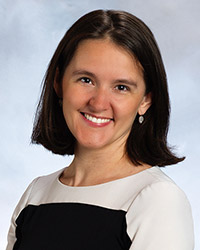
Katherine D. Hicks-Courant, MD
I am driving to my in-laws’ for Passover and pass exit 272 on the highway. “272,” I think. “Is that a GOG study?” I run through my mental catalog—GOG 252, GOG 262. For the rest of the drive, whether GOG 272 exists eats at me. (It does not).
It is early April, and my subspecialty oral boards are in two weeks. They are a rite of passage, a test, an ordeal. “The Last One,” I tell people. Quickly followed by a quieter, “I hope.”
I sit at our Passover seder with my family and my in-laws. During the seder, we follow the Haggadah, a guide to the retelling of the Exodus story and the seder meal. There are four children, says the Haggadah, who represent different approaches to learning: the heedless, the foolish, the dull and the wise. The heedless child asks “what does this mean to you?” as if they are separate from the rest of us. The foolish child asks what happens without asking about what it means. The dull child doesn’t ask anything. The wise child asks, “what is the meaning of each thing we do?”
What is the meaning of each thing we do? As my daughter, niece and nephews sing the question out in Hebrew, I think of clinical trials. I have spent almost every Saturday morning for the last 6 months in a study group with colleagues from around the country. Time between surgical cases is spent on flashcards. The precious hours between kids’ bedtimes and my own sweet sleep are spent watching lectures. There is always studying to do.
Yet, it doesn’t stay in my brain. I trade one fact for another. I trade answers for questions. How can I justify adjuvant immunotherapy for this patient? Why can’t all studies report outcomes the same way? Why don’t we know more? I am relieved to finally feel that I have a grasp on the management of sentinel lymph nodes for the vulva. I am frustrated at spending mental energy learning details of outdated radiation techniques. I am perplexed by adjuvant therapy for uterine cancer.
I review my case list and relive the last 18 months, which have been the hardest months of my life. My father was diagnosed with and rapidly passed away from ALS. My mother was diagnosed with glioblastoma. I had a baby. I traveled frequently with my baby or my breast pumps to visit my mother in another state. My mother passed away in December, just a year after her diagnosis. Between maternity leave and caring for my mom, I only worked 8 months in 2025. My patients provided kindness, structure, routine and purpose during this tumultuous time, for which I will always be grateful. Now they are just numbers and columns on a list. Have I done right by them? What data did I use? Will I do them each justice?
My colleagues covered for me for a third of the year. They threw me a baby shower. They brought me food and a memorial fig tree for my mom. They told me to take all the time I needed and meant it. They gave me extra time to study for my test. Will I let them down if I don’t pass?
I am seeing my mom everywhere this spring as her favorite flowers (daffodils) bloom and the birds emerge. I feel her absence as the anxiety around this test grows and she is not here to call. If I fail, I tell myself, I can blame grief. If I pass, what will I do with all my time? I fear that grief will fill it.
In my most anxious moments, I ask myself why I am doing this. I find that the why and the meaning behind it are different. Why am I taking this test? Because I have to—for my job, for my career. My contract requires it. What it means is external validation that I am a capable doctor. Moreso, however, it means freedom. Freedom to not have anything else to dread. Freedom to not have something hanging over me. Maybe there will be a hobby, maybe there will be a new role at work, maybe there will be grief. It is freedom to find out.
Oral boards are certainly no exodus from Egypt or parting of the Red Sea. I probably will promptly forget the borders of four-field pelvic radiation and even the hazard ratio of a seminal study or two. But for now, I come back to “what is the meaning of each thing we do?” This question is what makes this test different than all other tests. I was dull as a medical student, overwhelmed with no idea what to ask. I was foolish as a resident, just trying to learn what to do, what the steps are. I was heedless when I was sitting for my general oral boards, reciting obstetrics and benign gynecology that I had no plan to practice. Now, I must be wise, understanding what each trial means for my practice and my patients. And months of studying, my study group, my colleagues, my patients, and even my grief have made me wiser. Three hours and time will tell if I am wise enough.
Katherine D. Hicks-Courant, MD is a Gynecologic Oncologist at Penn Medicine Lancaster General Health. She is also a member of the SGO Quality Care committee.