When SGO President-Elect I Jubilee Brown, MD arrived on Capitol Hill for her first Advocacy Day, she expected to feel overwhelmed.
Instead, she left empowered.
As a professor at Wake Forest University and Division Director of Gynecologic Oncology at Levine Cancer Institute at Advocate Health in Charlotte, North Carolina, Dr. Brown is no stranger to leadership. Yet even with decades of experience advocating for patients in the clinic, stepping into the policy arena felt different.
“Anything that’s new is scary,” she reflected. Like many first-time attendees, she worried she wouldn’t know enough, say the right thing, or be prepared for conversations with congressional offices. But what she discovered is something many Advocacy Day participants experience: you don’t have to be a policy expert to make a meaningful impact.
You simply have to show up.
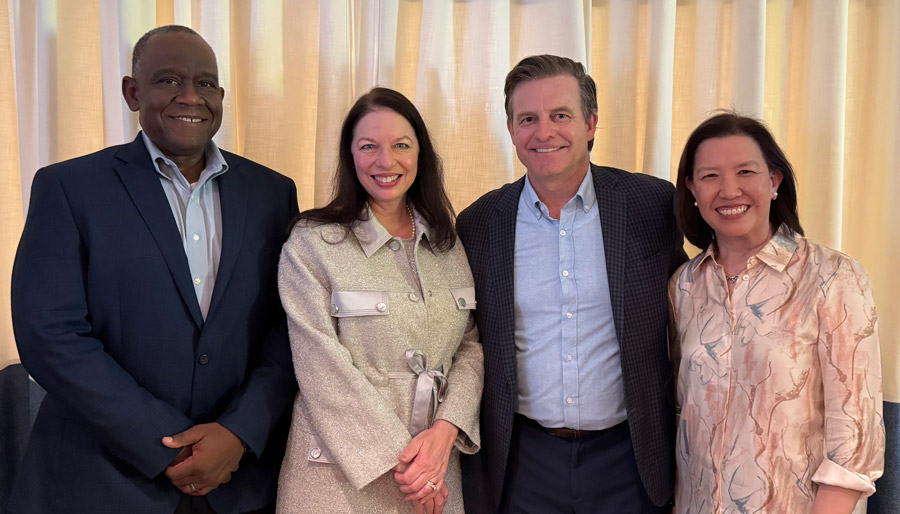
Why Advocacy Matters
For Dr. Brown, the decision to participate was rooted in both professional responsibility and personal conviction.
“As a citizen of this country, it’s a huge privilege to be able to advocate for what our patients need,” she said. “As a gynecologic oncologist, it’s my responsibility to do so.”
Every day, SGO members witness firsthand how federal policies affect cancer research, access to care, workforce development, and patient outcomes. Advocacy Day provides an opportunity to bring those real-world experiences directly to lawmakers and their staff.
And those voices matter.
“It felt important,” Dr. Brown said. “If I don’t tell our congresspeople, we can’t affect change.”
You Are Never Doing It Alone
One of the biggest misconceptions about Advocacy Day is that participants are expected to navigate Capitol Hill on their own.
Dr. Brown quickly learned the opposite.
“I was completely wrong,” she said of her initial concerns. “You’re never alone.”
From policy briefings and issue education to coordinated meetings and on-the-ground support, SGO’s advocacy team helps participants feel informed, prepared, and confident every step of the way.
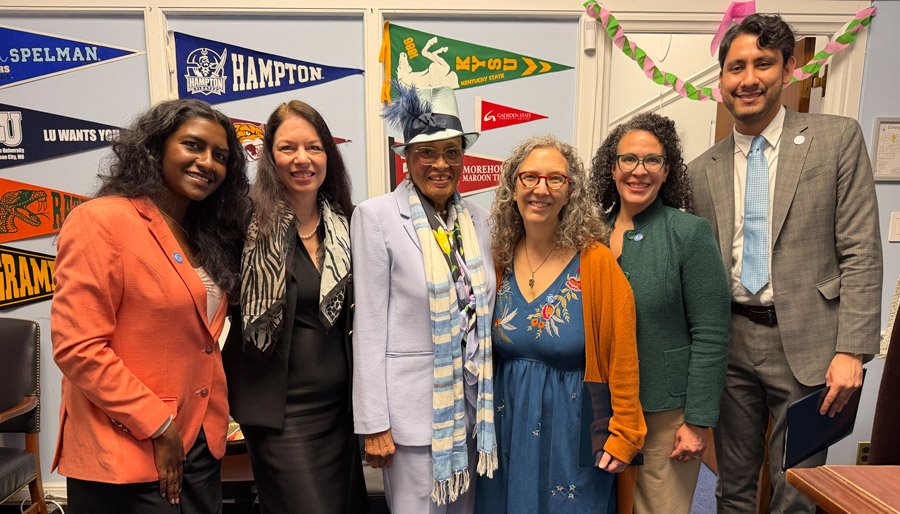
In fact, one of the highlights of her experience was the camaraderie she found among fellow advocates. Her group included gynecologic oncologists, a medical student, a postdoctoral researcher, patient advocates, and SGO staff, all united around a common goal.
“We’re all unified. We’re all on the same page. It’s such a great experience.”
That sense of belonging matters. Research consistently shows that people are more likely to take action when they know others are standing alongside them. Advocacy Day isn’t about individual voices. It’s about the collective strength of the gynecologic oncology community.
The Conversations That Stay With You
Ask Dr. Brown about her most memorable moments, and she doesn’t mention policy talking points.
She remembers people.
She remembers standing with fellow advocates beneath the Capitol dome, united in purpose. She remembers meeting her own congressional representative, Representative Alma Adams, and beginning a relationship that continues today through follow-up conversations with local staff. She remembers returning to Washington, D.C., decades after childhood visits with her mother, and feeling a profound sense of coming full circle.
Perhaps most surprising was the response from congressional offices.
“I think how receptive the staffers were,” she said. “They really wanted to learn from us.”
For physicians and researchers who may wonder whether their perspectives will be heard, that message is worth repeating: policymakers want to understand the realities facing patients and providers. Your expertise fills a critical gap that data alone cannot.
Your Story Is Your Superpower
No one can tell the story of gynecologic cancer care better than the people who live it every day.
Advocacy Day isn’t about becoming a policy specialist overnight. It’s about sharing your experience, elevating patient needs, and helping decision-makers understand the real-world impact of their choices.
That’s why first-time participants often discover that the most valuable thing they bring to Capitol Hill isn’t policy knowledge. It’s perspective.
And every member has one.
Advocacy Doesn’t End After Advocacy Day
While Advocacy Day is one of SGO’s most visible advocacy events, advocacy is not a once-a-year activity.
Meaningful change happens through ongoing engagement. Whether it’s responding to an action alert, building relationships with local congressional offices, sharing patient-centered perspectives, or participating in future advocacy initiatives, every interaction helps advance the priorities that matter most to our patients and our profession.
Dr. Brown’s experience serves as a reminder that advocacy is not reserved for a select few. It is a responsibility and an opportunity shared by all of us.
If you’ve ever wondered whether Advocacy Day is for you, her answer is clear: it is.
Ready to Take the First Step?
Join fellow SGO members in shaping the future of gynecologic cancer care through advocacy.
Learn more about how you can get involved throughout the year and explore upcoming advocacy opportunities on the SGO Advocacy page: https://www.sgo.org/advocacy/
Your voice matters. And together, our voices can drive change.